Explained in 30 seconds
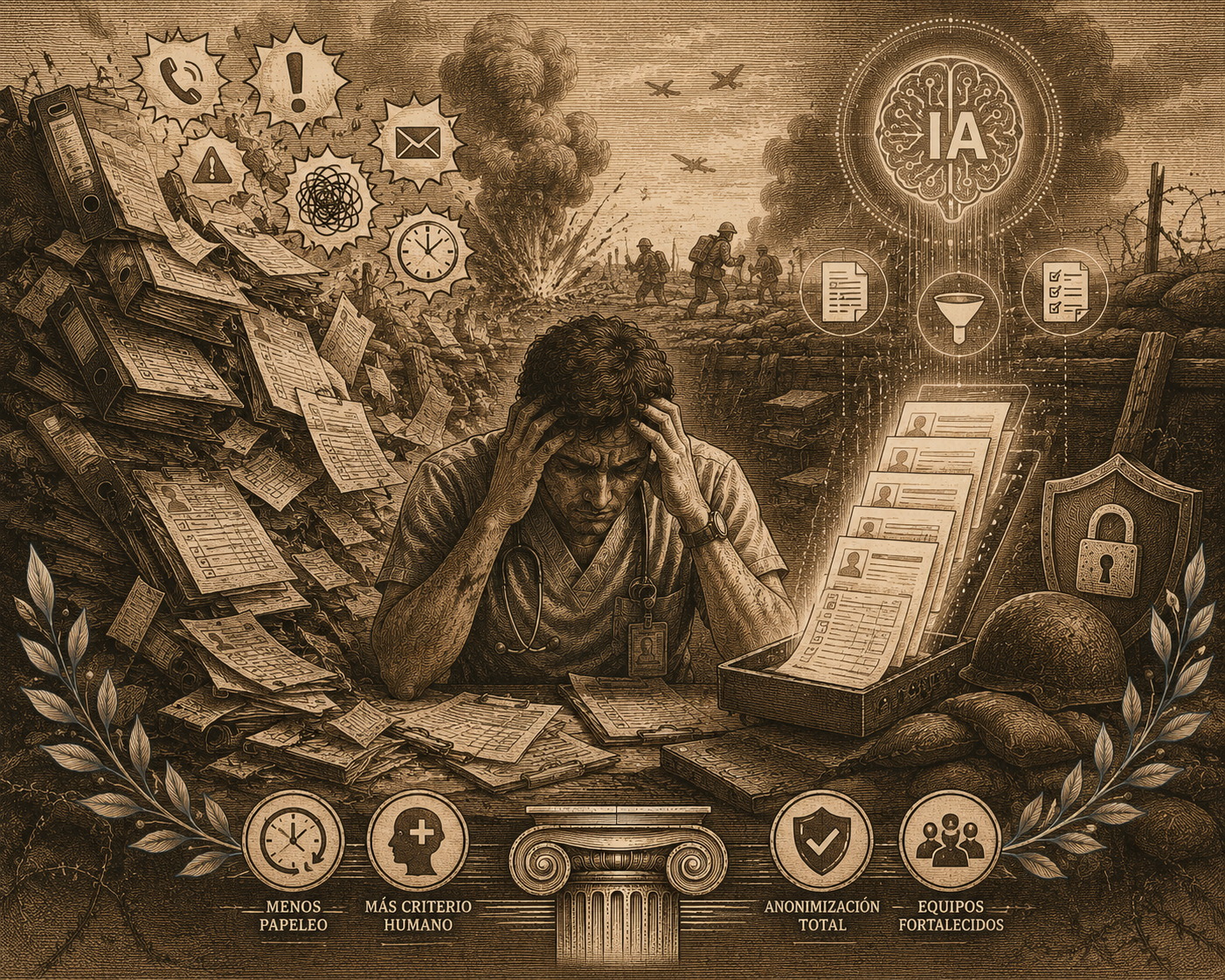
Complex systems rarely collapse because of one great error. They collapse through the quiet accumulation of small deviations that eventually become normal. In healthcare, one of the most dangerous is chronic exhaustion. When an organization begins to see exhausted people as normal, it stops managing people and starts managing risk without recognizing it.
The problem is not fatigue
The problem is when fatigue stops drawing attention.
Every organization operates under pressure.
Hospitals.
Companies.
Governments.
Educational centers.
Security forces.
No complex system works under ideal conditions.
The difference appears when exceptions begin to become the norm.
An extended shift may be inevitable.
A difficult call night may be inevitable.
A hard week may be inevitable.
But when the exception becomes permanent, the system begins to adapt to deterioration.
And that adaptation is often invisible.
The normalization of deviance
Sociologist Diane Vaughan used the concept of normalization of deviance to explain how highly sophisticated organizations can gradually become accustomed to operating outside safe margins without perceiving the danger.
It does not happen overnight.
It happens slowly.
First there is one overload.
Then a second.
Then a third.
Nothing serious seems to happen.
The system keeps functioning.
And precisely because of that, risk increases.
Because the immediate absence of consequences is interpreted as evidence of safety.
Not as a signal of fragility.
When functioning does not mean being healthy
One of the greatest management mistakes is assuming that a system that continues to function is a healthy system.
Not necessarily.
Many organizations continue producing results while silently consuming their human reserves.
Productivity remains.
Indicators look acceptable.
Processes continue.
But internally, wear increases.
Adaptive capacity decreases.
Critical thinking is reduced.
Shortcuts appear.
Omissions become normalized.
And the organization becomes increasingly dependent on individual sacrifice to sustain its operation.
The technological illusion
There is a frequent belief in digital transformation: that more technology automatically equals more safety.
Reality is more complex.
Digital systems do not eliminate human errors.
They redistribute them.
They accelerate them.
They scale them.
An incorrect data point.
An omitted validation.
A rushed decision.
A poorly defined configuration.
In highly automated environments, small failures can propagate at a speed impossible in purely manual systems.
Technology processes information.
It does not evaluate exhaustion.
It does not recognize stress.
It does not detect moral fatigue.
It does not identify emotional overload.
That is why the most sophisticated systems still depend on something deeply human: the quality of the decisions made by the people who use them.
The real bottleneck
For years, people talked about infrastructure.
Then they talked about data.
Today they talk about artificial intelligence.
Yet the limiting factor remains the same.
People.
Not because they are the problem.
Because they are the most valuable and most vulnerable component of any system.
Most organizational failures do not emerge from a lack of technology.
They emerge when the human capacity to supervise, interpret, and correct begins to deteriorate.
What robust systems understand
The most resilient organizations are not built by demanding extraordinary individuals.
They are built by designing structures that recognize human limits.
They do not celebrate exhaustion.
They do not romanticize permanent sacrifice.
They do not turn overload into a medal.
They understand that safety emerges from something less epic and far more difficult: creating conditions where people can continue thinking clearly.
An uncomfortable question
When an organization needs its people to work permanently at the limit in order to sustain results, is it demonstrating strength?
Or is it hiding a structural fragility?
The answer matters because complex systems rarely collapse when the first signs of wear appear.
They collapse when they stop seeing them.
And by then, the problem is no longer individual.
It is systemic.
Nexus Humanum
The central question is not how much one person can endure.
The question is how much risk a system is willing to normalize before recognizing that it has begun to depend on exhaustion in order to function.